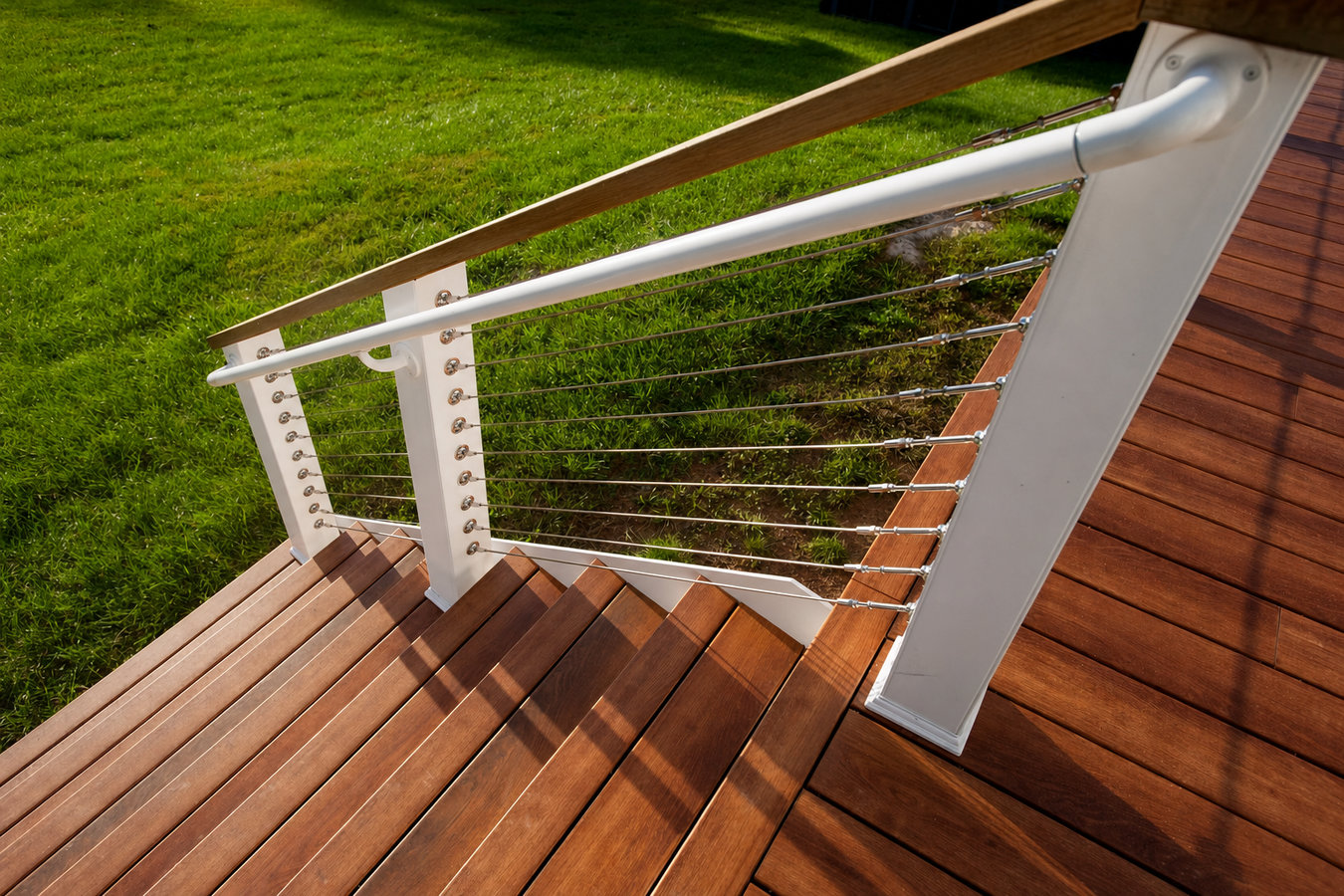
A wobbly or outdated railing is a safety problem, not just a cosmetic one. We install deck railings in Albany that meet current California code, hold up to Bay Area fog and salt air, and pass city inspection before we call the job done.
Deck railing installation in Albany, CA involves removing old railing if present, setting new posts into or onto the deck frame, and attaching the top and bottom rails and the vertical balusters between them, with most residential jobs completed in one to two days on-site.
The piece of this that matters most - and that most homeowners do not think to ask about - is how the posts are anchored. Posts bolted through the rim joist with proper hardware are far more secure than posts surface-mounted with screws. Albany's location near the Hayward Fault means post anchoring hardware also needs to be robust and properly torqued, not just adequate. We inspect the existing deck framing before any work begins, because attaching a new railing to a rotting rim joist is like putting a new lock on a broken door. If any framing repair is needed, we tell you before work starts - not after.
If the deck structure itself has more serious issues, a deck repair and replacement project may need to come first - something we can assess during the same site visit so you have a clear picture of what your deck actually needs.
Grab the top rail with both hands and push firmly side to side and front to back. If it moves more than a tiny amount, the posts are no longer secure. A wobbly railing is not a cosmetic problem - it is a fall hazard, especially if children or elderly family members use the deck regularly.
Albany's persistent coastal fog means wood railings that have not been regularly sealed are especially prone to moisture damage. If you press a thumb into a post or rail and it gives, or if the wood has turned a deep gray and is starting to splinter, the material has likely begun to rot from the inside. Painting over it will not fix the underlying problem.
Stand back and look at the spacing between the vertical balusters. If you can fit your fist through the gap, the spacing does not meet current California code. Older Albany railings installed before current requirements were adopted often have this problem - worth correcting, especially if young children visit your home.
Some older Albany homes have decks built before railing requirements were strictly enforced - no barrier at the edge whatsoever. If your deck surface is 30 inches or more above the ground, California requires a railing at least 42 inches tall. Beyond the legal requirement, an unguarded elevated deck is a real fall risk every time someone steps outside.
Before we recommend a material, we look at two things: your deck's existing condition and where you live in Albany. A home near the shoreline or the Albany Bulb sees more salt air and bay moisture than one further inland - and that affects what holds up well over time. Aluminum and powder-coated steel need almost no maintenance in this climate. Composite railing materials - which look like wood but are made from a blend of wood fiber and plastic - are another strong choice. Natural wood is possible, but it requires a committed sealing and maintenance schedule in Albany's damp environment. For homeowners who want views preserved, cable railing uses stainless steel cables tensioned between posts and is one of the most popular choices on elevated Albany decks overlooking the bay.
Stair railings are a separate consideration from deck perimeter railings - California code requires stair railings to be graspable, which rules out some decorative top-rail profiles. We include stair sections in the initial quote so there are no surprises later. All railing installations are permitted and inspected through Albany's Building Division. The International Code Council publishes the base standards - height, baluster spacing, post strength - that California's building code builds on, and we design to meet those requirements on every project. If your deck needs a full rebuild alongside new railing, a custom deck design and build project lets us plan both as a single integrated job.
Best for homeowners who want a low-maintenance, code-compliant railing that holds up to Albany's coastal moisture without annual painting or sealing.
Best for homeowners who want the warmth of a wood look without the upkeep - composite materials resist moisture and do not need regular staining.
Best for homeowners with elevated decks and bay or hill views - stainless steel cables preserve sightlines while meeting California height and tension requirements.
Best for homeowners who prefer natural wood and are committed to a regular sealing and maintenance schedule - cedar and redwood perform best in Albany's climate.
Albany sits directly on the eastern shore of San Francisco Bay, and the combination of marine fog, salt air, and year-round moisture is genuinely hard on outdoor wood. Untreated or poorly sealed wood railings can begin to show rot and splitting within just a few years in this environment. That is one of the strongest arguments for choosing aluminum, stainless steel cable, or composite materials here - they simply hold up better than they would in an inland city. Albany's housing stock adds another dimension: a large share of the city's homes were built between the 1920s and 1960s, and many of the decks attached to those homes have never had their framing inspected. We check the rim joists - the outer framing boards where new posts will attach - before any work is quoted, because surprises there cost you money and time if they are found mid-project.
Albany is also in a high seismic zone, with the Hayward Fault running nearby in the East Bay hills. That does not make a railing project complicated, but it does mean post anchoring hardware should be rated for the conditions here - not just minimally adequate. A contractor who works regularly in the East Bay knows this and uses the right hardware from the start. We serve homeowners throughout Albany and also work regularly in neighboring Berkeley, CA and El Cerrito, CA, where the same coastal and seismic conditions apply.
We ask about your railing length, whether you have stairs, and what material direction you are considering. Then we schedule a free on-site visit to measure the deck and inspect the existing framing. We reply within one business day and do not accept firm pricing over the phone - accurate quotes require seeing the actual conditions.
Once you approve the written quote, we submit the permit application to the City of Albany. For a straightforward railing project, approval typically takes one to two weeks. We handle the paperwork - you should not need to do anything except sign off if the city requires owner authorization.
The crew removes the old railing if applicable, sets and secures the new posts, and installs the rails and balusters. For a typical Albany home deck - 40 to 60 linear feet - this takes one full day. Stairs, custom corners, or gate openings may run into a second day. Being available by phone is helpful if questions come up.
Once installation is complete, we schedule the final inspection with Albany's Building Division. The inspector checks railing height, baluster spacing, and post anchoring - the whole visit takes less than 30 minutes. After sign-off, we walk you through the finished railing and leave you with a copy of the signed permit for your records.
Free on-site estimate. Framing inspected before we quote. Permits handled from application to city sign-off.
(341) 386-0095Older Albany homes sometimes have deck framing that has seen better days, and a contractor who does not check before starting can end up charging extra mid-project for repairs they claim they did not expect. We inspect the rim joists and post attachment areas during the site visit - so the number you approve is the number you pay, barring something genuinely hidden that we discuss with you before proceeding.
Albany's Building Division requires a permit for elevated deck railing work, and the city inspection that follows is your documentation that the job was done correctly. We submit the application, respond to any city questions, and schedule all inspector visits on your behalf. You receive a copy of the signed permit when the job is done - which matters when you sell.
Albany's salt air and year-round fog are harder on outdoor materials than most people expect. We recommend aluminum, composite, or stainless cable for most Albany homes because those materials hold up without annual maintenance. If you want wood, we match the species and sealing schedule to what actually performs here - not what looks good in a product catalog from an inland market.
Albany is in a high seismic zone, and the East Bay has several active fault lines nearby including the Hayward Fault. We use post base hardware rated for seismic conditions on every installation - properly sized and torqued, not just the minimum that passes a casual inspection. This is a detail that matters for the long-term safety and stability of your railing.
A properly installed, permitted railing is not just a safety feature - it is a selling point that holds up under a buyer's home inspection. When Albany homeowners are ready to list, we want their deck to be an asset, not a negotiating chip.
If the deck itself needs to be rebuilt, we design and build from the ground up - railing included - as a single permitted project.
Learn MoreStructural repairs to decking boards, joists, posts, and ledger connections - often the right first step before new railing is installed on an older Albany deck.
Learn MoreCall or send a message today - we will visit your deck, check the framing, and give you a written quote with no pressure and no obligation.